

If you’re looking for Hvar Island souvenirs, you probably want more than a fridge magnet (although those are perfectly fine to begin with!) You want things that actually remind you of the lavender fields, the sea, the stone streets and the long sunny days once you’re back home… things that truly matter.
Hvar is one of the easiest places in Croatia to avoid the “souvenir trap.” Most of what you see here comes straight from the island’s nature: lavender, olives, grapes, figs, herbs, agave. When you know what to look for, you can bring home things you’ll use, eat, wear or keep for years instead of tossing them in a drawer.
In this guide, I’ll walk you through the best, most authentic souvenirs from Hvar, where to buy them, how to choose quality products, and how to get them home in one piece. Because, as you will soon find out, it’s worth doing your best to keep your Croatian vacation memories intact!
At a Glance: Top Hvar Island Souvenirs
If you’re short on time (or luggage space), here are the souvenirs that I recommend trying and bringing back home besides the regular trinkets:
- Lavender products (sachets, oils, soaps)
- Honey from herbs like rosemary, sage and lavender
- Extra virgin olive oil and simple herbal cosmetics
- Local wines and rakija (herbal brandy and fruit liqueurs)
- Traditional sweets and biscuits (paprenjok, cviti, fig and carob treats)
- Handmade agave lace from the Benedictine nuns
- Coral and silver jewelry from small workshops in Hvar Town
If you want to know more, including where to buy them to make sure you get the authentic products, read on!
Hvar Island Souvenirs From The Lavender Island
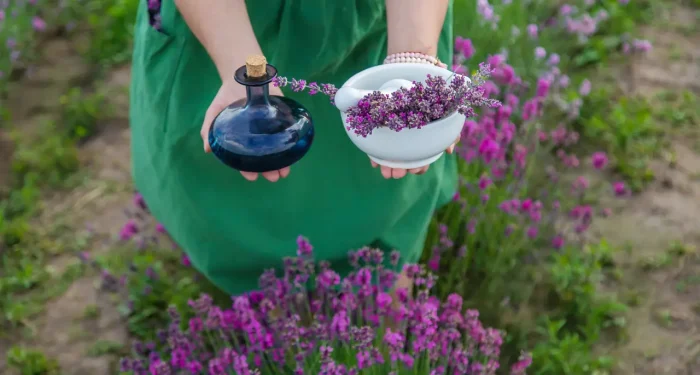
I can guarantee you that Hvar Island isn’t a place to fall into the “souvenir trap” shopping for junk souvenirs that have little to no meaning. When you start seeing how much lavender is grown here, you’ll understand why.
There is an old saying: “rose is the scent of heart, lavender is the scent of soul.” In June and July the island turns purple with lavender blooms, especially around the old villages in the hills.
Driving from Stari Grad through Selca and Brusje villages all the way to the town of Hvar, you can enjoy the lavender fields on the hill slopes, breathing the lavender scent with every open window.
The fact is that most local products on the island are directly related to its nature and Mediterranean position. That’s why any good Hvar souvenir has a tight connection with the natural environment. Lavender is the best example.
Lavender products to look for
The two most popular lavender souvenirs are still the classics:
- Lavender oil, sold in small, stylish bottles.
- Fragrance bags of “Lavandula Croatica”, filled with dried lavender flowers.
These small products are practical and useful and should have their place everywhere: in cars, in offices, in apartments, in wardrobes or by pillows for a good night’s sleep.
You’ll also see lavender soaps, creams, small bunches tied with ribbon and sometimes lavender-based room sprays or pillow mists.
When you buy, look for:
- Labels that mention Lavandula angustifolia or Lavandula Croatica.
- Small local producers, especially in and around Stari Grad, Hvar Town and Jelsa.
- Simple, clean ingredient lists if you choose creams or balms.
Where and when to buy lavender
If you visit in June or July, you’ll see the fields themselves around Velo Grablje, Selca and Brusje, but lavender products are easy to find all summer long. Look for:
- Stalls along the road near the fields.
- Stands and small shops in Hvar Town’s old streets.
- Markets in Stari Grad and Jelsa.
Lavender production is an important part of the island’s identity. That is reflected in the lavender festival, held every year in and around the small village of Velo Grablje near Hvar Town.
Dates move a bit from year to year, so check with the local tourist office for current information.
Also read: the Best Beaches in Hvar, Croatia
How to pack and use lavender at home
Lavender sachets are almost weightless and safe in hand luggage. Oils and sprays need to follow liquid rules if you fly with a cabin bag, so keep them under 100 ml and in a clear bag, or put them in checked luggage and wrap them well.
At home, rotate sachets between your wardrobe, drawers and nightstand. Lavender oil is very concentrated, so just a drop or two on a cotton pad or ceramic diffuser is usually enough.
That way, every time you open a drawer or lie down in bed, you’ll get a small reminder of Hvar. Perfection!
Honey With Scents Of Rosemary And Lavender
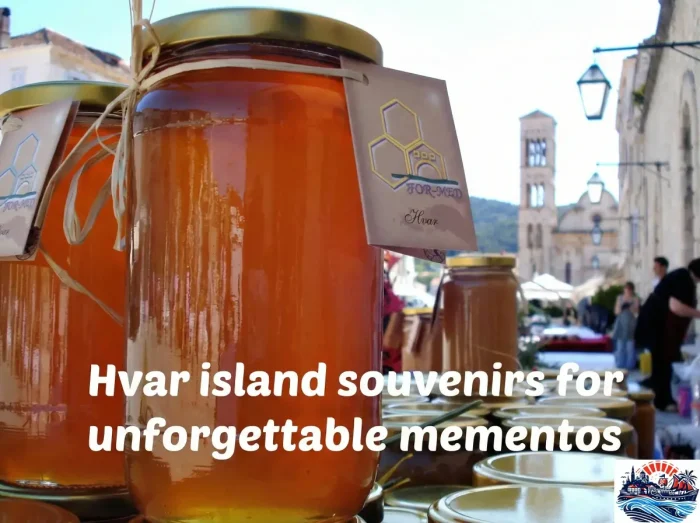
Lavender is a favorite among beekeepers, too! The color of its honey is light and the smell is intense and aromatic. Sage and rosemary also grow all over the island, which turns Hvar into a kind of open-air garden for honeybees.
Honey has a long production tradition on the island. Honey and bees were mentioned in 1331, and the famous poet Petar Hektorović wrote about honey in his work Fishing and Fishermen Talking in 1566.
When you buy a small jar of honey here, you are taking home something with real history behind it, not just a sweet spread. Although even the sweet spread is delicious!
Keep in mind that Lavender honey has a stronger aroma and deeper flavor and is often used in herbal teas or as a calming evening sweetener.
Where to buy honey on Hvar
Beekeepers Association “Levanda” from Stari Grad has in the past organized “Honey Days of Hvar Island” during the summer, when local producers present different types of honey and honey-based products.
This kind of event is the best opportunity to talk directly to beekeepers, ask questions and taste honey before buying.
Outside of events, you’ll find honey:
- In small family shops and market stalls in Stari Grad, Jelsa and Hvar Town.
- At some wineries and specialty food shops that gather several local products under one roof.
If you see a stall with jars that are clearly labeled with the producer’s name, the type of honey and the place of origin, that’s usually a good sign.
Also read: Sucuraj, Hvar Island: Complete Travel Guide
Olive Oil and Herbal Products from Hvar
Even if you don’t notice it at first, olive trees are everywhere on Hvar. Between lavender fields, vineyards and stone terraces, you’ll see silvery-green trees that have been harvested by the same families for generations.
That turns olive oil into one of the best, most authentic souvenirs you can bring home from Hvar.
Why Hvar olive oil stands out
Many local families still pick olives by hand and take them to small mills, where the oil is cold-pressed. You’ll find both simple household oils and premium extra virgin bottles made in smaller batches.
How to choose good olive oil
You’ll find olive oil:
- At wineries (many producers offer both wine and oil).
- In specialty food shops in Hvar Town, Stari Grad and Jelsa.
- Directly from families who sell their oil at markets or at their homes.
Look for:
- “Extra virgin” on the label.
- Clear indication of origin (Hvar or at least Dalmatia).
- Harvest date if available – fresher is usually better.
Some products carry the “Hrvatski otočni proizvod” (Croatian Island Product) label, which marks quality goods made on Croatian islands. If you see that logo on olive oil, honey or cosmetics, it’s a good sign that the product is truly local and carefully made.
Herbal cosmetics and simple natural products
Apart from olive oil itself, you’ll see small bottles and jars made with:
- Olive oil as a base,
- Lavender, sage, rosemary or immortelle,
- Beeswax for balms and creams.
Shops like health food stores and organic corners (for example, places similar in spirit to Green House Hvar in the old streets) bring together local wines, oils and natural cosmetics in one place.
Here you can pick up a solid bar of soap, a small tin of balm or a bottle of herbal oil that will actually get used when you’re back home.
How to pack olive oil
Olive oil must go into checked luggage under current liquid rules for most flights. Choose smaller bottles if you travel light. Wrap them in clothes, then put them in a plastic bag as a second layer of protection.
Keep oil away from strong heat and direct sun both during your stay and at home. A cool, dark cupboard will help it keep its taste for longer.
Also read: Visit the Dubrovnik City Walls & King’s Landing
Wines and Liqueurs
Hvar Island has a long wine-growing tradition, particularly in some parts of the island that you’ll pass through anyway as you explore. There are three main areas you’ll hear about:
- The central part with picturesque villages like Svirče, Vrisnik, Vrbanj, Pitve and Dol.
- The fields of the Stari Grad Plain, where the island’s wine story really started in Greek and Roman times.
- The south-facing slopes of Hvar Island with the settlements of Ivan Dolac and Sveta Nedjelja, where vineyards drop almost straight towards the sea.
For wine lovers, there are some top locations for growing Plavac Mali wines. This local red grape likes steep slopes and a lot of sun, both of which Hvar has plenty of.
Among Hvar Island souvenirs, I suggest wines from the Plenković winery in Sveta Nedjelja, one of the most famous names here, with high-quality reds from vineyards that almost touch the sea.
Ivan Dolac is another name you’ll see on top-quality dry red wines with controlled origin, produced from Plavac Mali from remote locations on the southern slopes of the island. This noble wine has a dark ruby color, slightly tart flavor, rich bouquet and aroma.
Andro Tomić, the owner of a winery in Jelsa, is one of the most popular tasting destinations. Besides traditional wines he has introduced visitors to an unusual rosé and award-winning prošek (a sweeter dessert wine made from dried grapes that you probably know as Prosecco). If you have time for a proper tasting in Jelsa, this is a good place to start.
You’ll also find excellent wines from other island producers, so don’t worry if you can’t visit everyone. Many shops and wine bars in Hvar Town, Stari Grad and Jelsa stock a selection of local labels and will help you choose.
Rakija and local liqueurs
If you spend more than a few days on Hvar, you will inevitably be offered a schnapps of some sort, either by your host or in one of the island’s restaurants before or after the meal.
There is a wide choice of local brandy drinks on Hvar (rakija), made from herbs and fruit. The range of quality is as broad as the range of ingredients, and I have sampled some rather unusual and very delicious schnapps called rakija: from figs, walnut, olives and carob, to those flavored with honey or local herbs.
In Jelsa there is a shop with a wide range of Hvar schnapps located at the end of the waterfront of the old town, close to restaurant Paradiso. It’s a good place to taste a few before choosing a bottle or two to pack.
Also read: Visiting Diocletian’s Palace in Split
Taking wine and rakija home
Wine bottles and rakija are heavier than lavender and honey, so think about your luggage limits. A couple of tips:
- Put bottles in checked luggage, wrapped well in clothes and ideally in a special bottle sleeve or at least a thick plastic bag.
- Check alcohol limits for your country. Most places allow a few bottles for personal use, but amounts vary.
If you fall in love with a particular wine, ask the winery or shop if they ship abroad. Sometimes it’s easier to pay for shipping than to worry about broken glass in your suitcase.
Hvar island souvenirs with healthy taste and smell
Traveling around Hvar Island, you will have a chance to come across local homemade producers who use raw materials from the island itself.
Many of these delicacies are based on old grannies’ recipes and pair nicely with the wine, honey and olive oil you have already seen in earlier sections.
In Jelsa town, a newly founded women’s cooperative called Faria (started in 2014) has presented some indigenous products, offering sweets that use traditional ingredients from the island like figs and carob.
They offer pralines called Figolini (fig), Karobeli (carob) and Levonda (lavender) in attractive packaging.
Over time they have also experimented with new flavors, like Kadulja (sage) pralines filled with white chocolate and sage. These are small, elegant gifts that still taste like Hvar, not like something you could buy in any supermarket.
You will also find other sweet Hvar Island souvenirs based on local products such as:
- Orange peel with sugar – called arancini, classic candied citrus peel that goes well with coffee or tea.
- Olives in salt water – simple and traditional, a good match with cheese and bread.
- Traditional cookie from the island of Hvar – called cviti (“flowers”), delicate cookies often tied to family celebrations.
- Traditional cookie from Stari Grad town – called paprenjok, honey-based cookies with spices that have been linked for centuries with life in this part of Dalmatia.
Most of these treats are easy to pack. Just like honey, they are heavier than lavender but much lighter than wine bottles. Look for them in small family shops, cooperatives and markets in Jelsa, Stari Grad and Hvar Town.
If you already plan to buy wine or olive oil, adding a few boxes of sweets is a simple way to build a ready-made Hvar tasting set to share at home.
If you travel to a country with stricter rules on bringing in food, sealed sweets and olives in jars usually cause fewer problems than fresh food. Still, it is always wise to declare any food if your arrival form asks for it and check rules in advance if you are unsure.
Now, if you want to learn more about Croatia’s delicious, traditional cuisine, I recommend reading my previous article, Traditional Croatian Cuisine Guide.
High Quality Hvar Island Souvenirs From Agave
If you happen to be in Hvar Town, you should visit the Benedictine monastery. This quiet place hides one of the most special souvenirs on the island: handmade lace from agave threads.
The monastery nuns have perfected an unconventional way of making lace using agave fibers. They have been working in this technique for more than 150 years, exclusively behind the walls of their convent, established in 1664.
Originally this lace technique came from Tenerife, but over the centuries the Hvar tradition has taken on its own character.
During that time, Hvar lace has become richer and more detailed than many pieces from the Canary Islands.
Today these handmade laces are unique in the world and are recognized as part of UNESCO’s list of intangible cultural heritage.
There are no strict agave lace pattern rules. Each piece follows the imagination of the nun who makes it. The patterns are mostly full of sun and flowers, with bright, delicate forms that reflect the island’s light and nature.
If you decide to buy agave lace:
- Be prepared that it is not a cheap souvenir. Even small pieces take many hours of work.
- Ask about the story of the pattern you pick. This makes it even more special when you explain it at home.
- Pack it flat between clothing layers in your suitcase, or in a hard folder, so it does not bend or crease.
Agave lace is not the kind of thing you use every day, but as a long-term reminder of your Hvar trip, it is hard to beat. One small piece can stay in a family for decades.
Coral Jewelry and Ethical Shopping on Hvar
Hvar is an island of sunshine, lavender, palm trees, figs, agave, vineyards, pine trees, wine, olives and rosemary.
But down in Hvar Town’s old streets, you will also see something that comes from the sea: coral and shell jewelry.
Mediterranean red coral has a long tradition in jewelry, but there has been concern worldwide about overharvesting. When you shop on Hvar, it is smart to think about this side as well:
- Ask how and where the coral was sourced, especially if you buy a larger piece.
- Consider smaller, timeless items you will wear for many years, rather than trendy pieces you might forget.
- If you feel uneasy about coral itself, look at silver, seashell, glass and stone jewelry created by local artists. You still support island crafts without using more coral.
Buying jewelry in small workshops usually gives you a better chance to ask questions and get honest answers than buying cheap coral-look pieces from street stands.
Wrapping up
Hvar gives you many ways to spend your money on souvenirs, but if you focus on lavender, honey, olive oil, wine, sweets, lace and carefully chosen jewelry, you will go home with things that remind you of real places, faces and tastes on the island – not just random items with “Croatia” printed on them.