
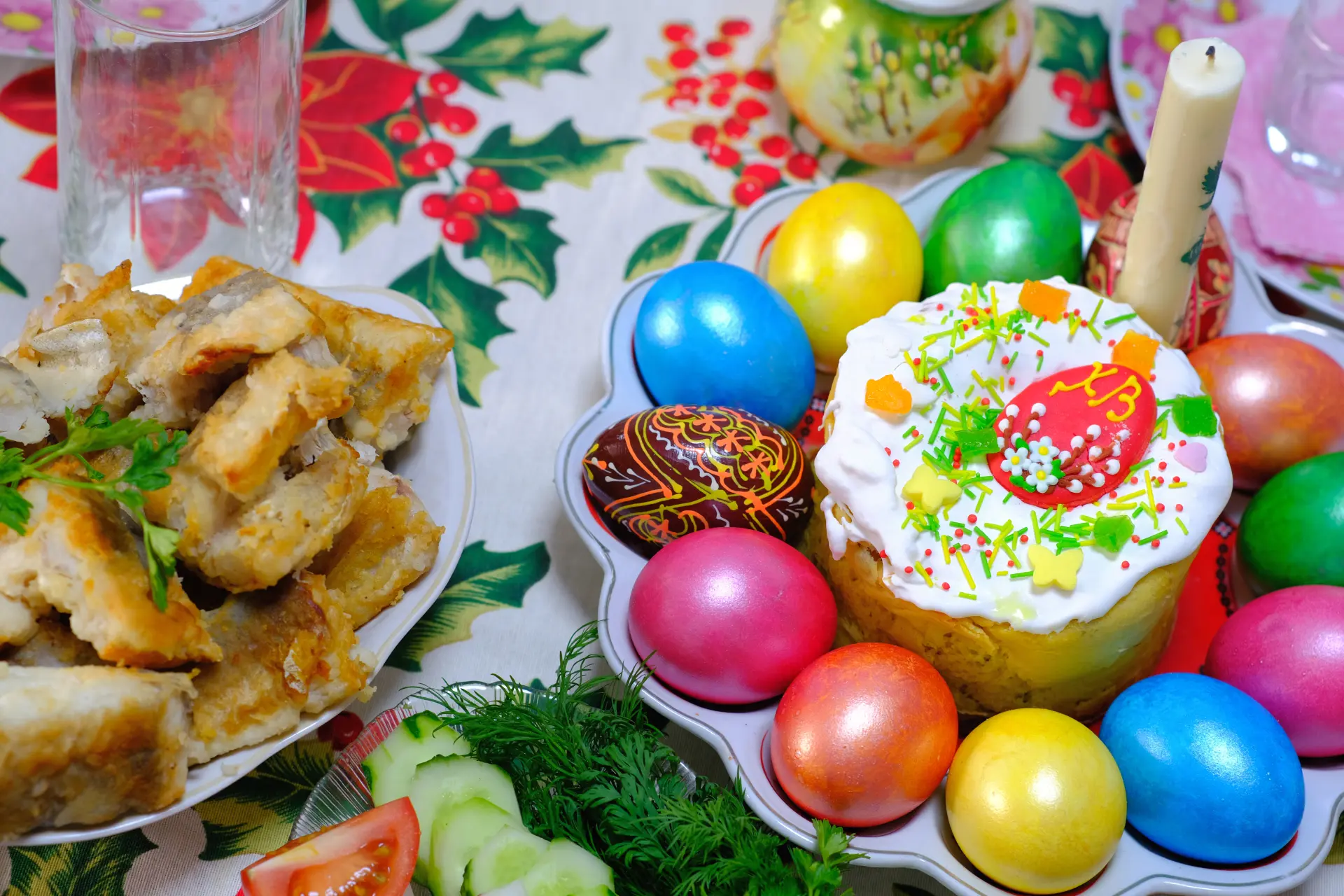
With Easter just around the corner, I decided it is the perfect time to talk a bit more about Croatian foods – specifically, traditional Easter foods we have here for this important celebration.
This way, if you will be here during the Easter celebrations, you know exactly what meals to choose – or at least what to expect. And you have a lot to be impressed with!
Just like with “regular” traditional Croatian foods, the ones we have specifically during Easter are a satisfying mixture of heavy Continental dishes and fresh Mediterranean flavors.
Before we begin, a quick warning: Don’t read this on an empty stomach!
Pisanice (Traditional Painted Eggs)
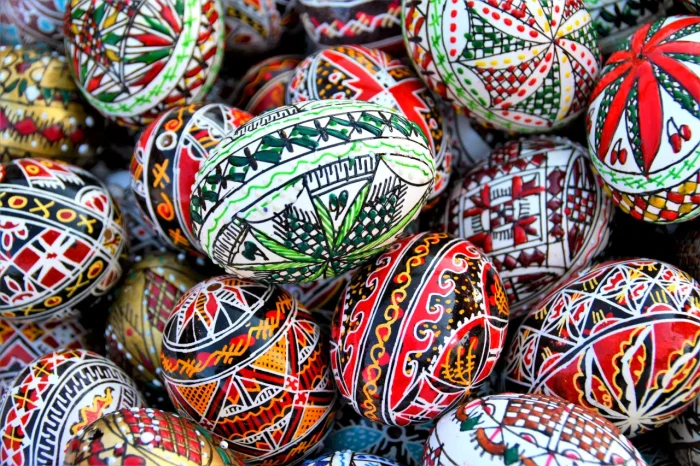
This is the star of the celebration, even though there plenty of other tastier options to be had. But Easter in Croatia doesn’t exist without Pisanice.
These are traditional hard-boiled eggs dyed in various colors (red is a must). Families love to dye them with natural ingredients like red onion and beetroot skins, pressed flowers, and small leaves to create beautiful, earthy patterns on the shells.
These are also used for the traditional egg-tapping game – everyone at the table picks their own egg and knocks it against their opponent’s egg. The last one standing is the winner.
Kids love this tradition the most and it can get very competitive – with solid eggs being treasured and cared for until their winning streak ends.
Pinca (or Sirnica)
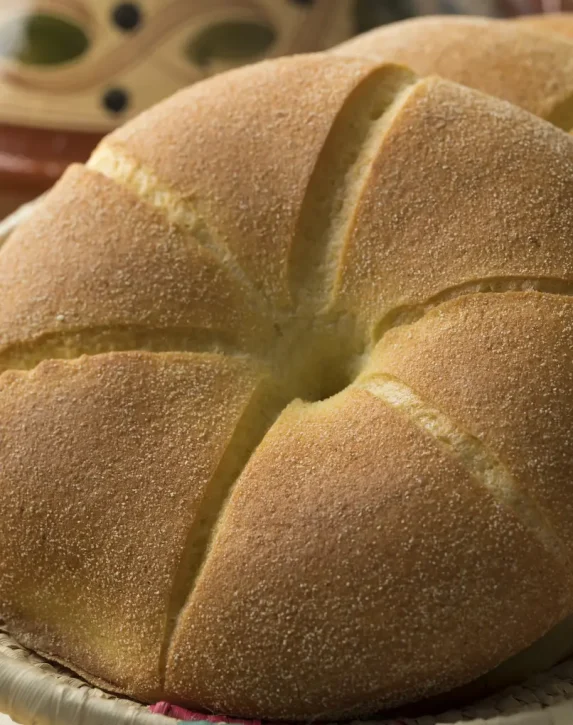
In most Croatian homes, the first sign that Easter has arrived is the smell of freshly baked Pinca.
Also known as Sirnica depending on where you are in the country, this is the simple yet special treat on the Easter table.
We’re talking about a sweet, brioche-like bread aromatized with lemon and orange zest, vanilla and maybe various other flavors, depending on the region.
The main thing that sets it apart is the traditional cross cut deep into the top before baking. It’s perfect for breakfast (pairs well with coffee), a snack throughout the day or a dessert after the main meal.
Also read: Where to Eat in Split
Šunka (Easter Ham) & Hren (Horseradish)
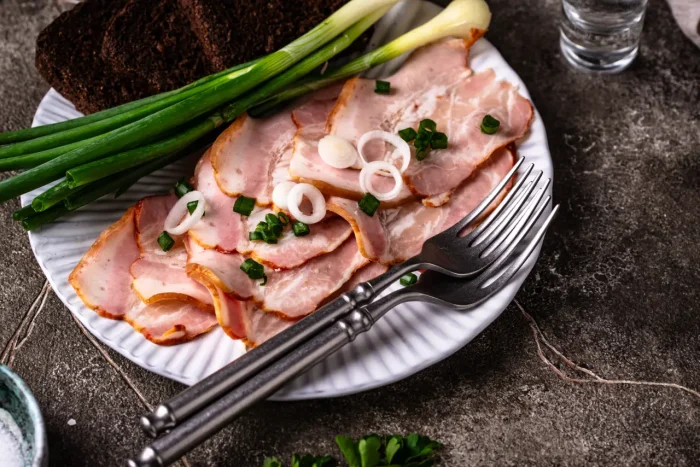
Šunka is a succulent, smoked joint of ham that Croatians – and everybody else who tries it – love.
There are different ways to prepare it for Easter – from baking it entirely inside a loaf of bread to, more recently, buying it from the stores and eating it sliced alongside freshly grated hren (aka horseradish).
While the latter will bring tears to your eyes if you’re not careful, it cuts through the richness of the meat perfectly and is a perfect match.
And if you can’t handle the aroma, you can always pair it with milder things like fresh spring onions and raw radishes.
Francuska Salata (French Salad)
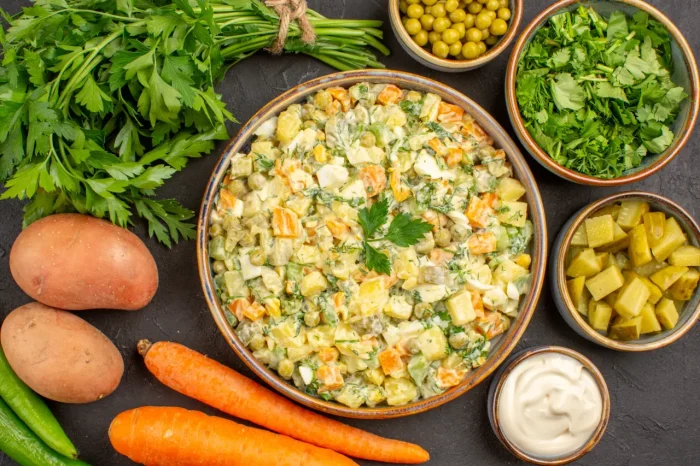
A variation of similar salads found in the region, the Francuska Salata (aka French Salad) is a must on any holiday table, Easter included.
Despite its name, it’s a very Balkan thing – a creamy, rich mixture of boiled potatoes, carrots, peas, and finely chopped pickles all bound together with a very generous amount of mayonnaise.
It is delicious and highly addictive, with some variants mixing in chicken or beef meat for added flavor. But no matter how it’s made, it’s that type of dish you’ll find yourself scooping onto your plate next to everything else throughout the day.
And, since it’s called a “salad,” you can even say that you’re eating healthy!
Roast Lamb
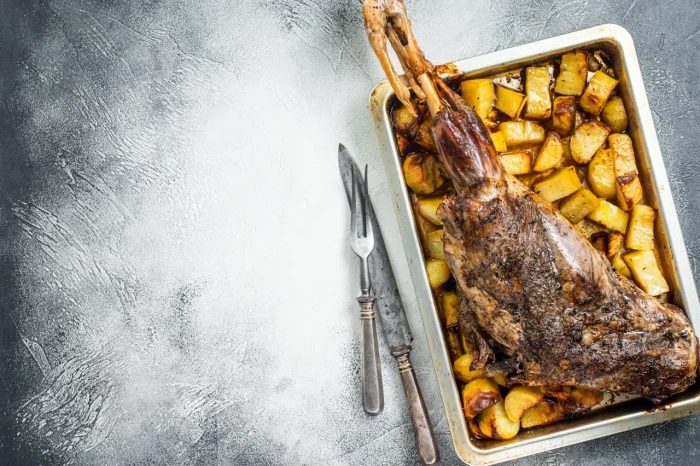
While lamb is not regularly consumed in Croatia, it is usually the main meat for the Easter lunch, each region preferring a specific part of the lamb, and cooking it in a specific way.
For example, if you are celebrating on the coast in Dalmatia or Istria, the star of the show is Janjetina. This is a slow-roasted spring lamb, traditionally cooked under a peka (a heavy iron bell covered in hot coals).
Other regions prefer an oven-baked lamb leg with roasted potatoes, lamb chops and so on. But you can’t have Easter celebrations in Croatia without lamb!
Turkey with Mlinci
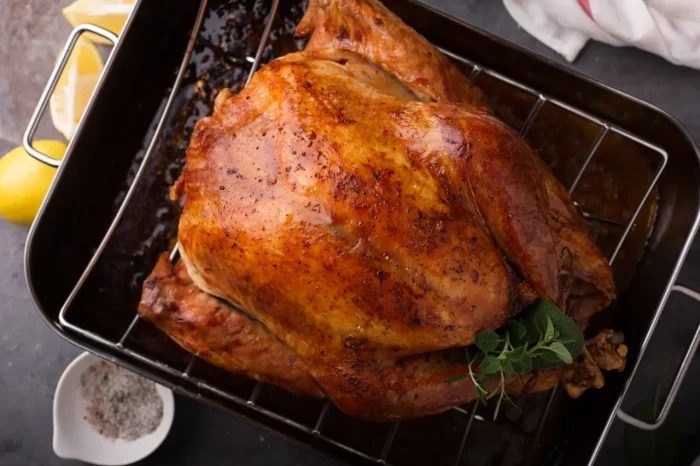
Inland in regions like Zagorje or Slavonia, the Continental influence takes over. Here you will be served Zagorje Turkey alongside mlinci.
These are traditional flatbreads broken into pieces and soaked in the juices dripped from the roasted turkey that was cooked at low heat for hours. It is delicious and I personally prefer the soaked bread to the turkey itself.
Extremely filling and guarantees a need for an afternoon nap!
Fritule
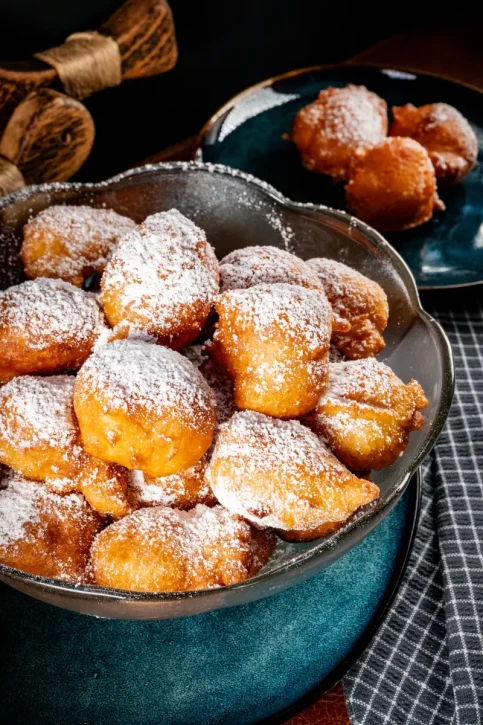
You need to save room for dessert. Along the coast, you will encounter two sweets that perfectly cap off a heavy meal.
The first are Fritule, bite-sized fried dough balls lightly dusted with powdered sugar. Every family has their own specific recipe, but they usually feature a splash of local brandy or citrus zest.
If you want to learn how to make this easy, yet delicious dessert, I recommend checking out my Fritule recipe here.
Rožata
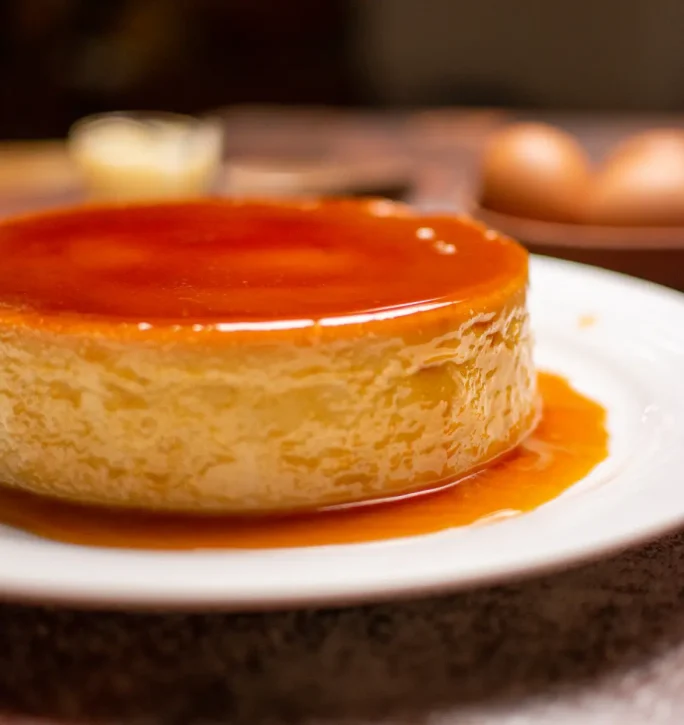
Then we have Rožata. This is a silky, caramel-coated custard originating from Dubrovnik. It is the perfect light finish after eating your weight in roast lamb and potatoes.
And if you want to explore other easy to prepare, yet tasty Croatian desserts, I recommend checking out my Krostule recipe.
Vegetarian or Vegan Options
Traditionally, Croatian cuisine focuses heavily on meat, especially during the holiday seasons – Easter included.
However, if you are vegan or vegetarian, you have plenty of options – especially lately, as veganism is gaining ground in the country.
Good Friday is actually a traditional meatless day across Croatia, with the focus shifting entirely to seafood like octopus salad or rich cod stews.
For a purely plant-based approach, you can fill up on fresh spring asparagus which is perfectly in season right now. You can also easily make a vegan version of the Francuska Salata by swapping in eggless mayonnaise.
Many local bakeries are also starting to offer vegan sweet doughs to accommodate changing dietary preferences, so you will definitely not go hungry.
Final Thoughts
So there you have it! These are the traditional dishes that make Croatian Easter foods so special and the exact reasons why diets take a backseat during the spring.
Have you tried any of these delicious dishes, or is there one you are dying to taste? Let me know in the comments below!