

Zagreb’s Lower Town (Donji Grad) hits you with a completely different energy than the Upper Town‘s quaint, sleepy cobblestone streets: it is now considered the center of business, shopping, art, museums, and spacious parks
Nestled in the heart of Zagreb, it is one of the 17 distinct districts that define the city’s landscape.
Constructed largely in the 19th century, this area is a grid of broad avenues, massive parks, and imposing Austro-Hungarian architecture that serves as the city’s center for business, shopping, and art. But there is a sad reality we need to talk about before moving on with this travel guide.
Following the massive earthquakes that shook the city earlier in the decade, Zagreb has been in a massive cycle of rebuilding. Today, you will still see scaffolding and restoration work, particularly on the historic museums.
This doesn’t mean you should skip it. In fact, seeing the city rebuild itself adds a layer of resilience to its character that you wouldn’t witness otherwise. So, with these in mind, let’s learn everything you should know about Zagreb’s Lower Town area and its main attractions!
Architectural and Cultural Highlights
Donji Grad technically begins at the main square, Trg Bana Jelačića, extends down Ilica Street (the longest street in Zagreb), and stretches south to the main train station.
This large square lies under the sword of Ban Jelacic, a symbol of the Croatian revival, framed by buildings in the classical, Vienna’s Art Nouveau and rationalist style, always crowded with busy people.
This is actually the meeting point for everyone in the city – “Let’s meet under the clock” is the standard phrase here.
The district’s architectural grandeur, marked by Austro-Hungarian influences, speaks volumes of its historical significance.
Ornate facades in the Secession style adorn the landscape, highlighting the artistic trends of the early 20th century, and they are nicely complemented by garden squares that add a touch of green to the urban landscape.
While the Lower Town is flat and walkable, it is also the hub of the city’s blue tram network. If you plan to use the public transit system, make sure to check out my guide to Public Transportation in Zagreb.
Before getting in-depth with each of the main attractions in the area, here is a summary of what you should visit when here:
- Museums and Galleries: The Lower Town is perfect for art enthusiasts and history buffs. Its museums offer insightful exhibitions in many fields and covering various eras.
- Parks and Squares: These are perfect for breathing in a bit of nature in the urban setting.
- Cafes and Shops: No visit to Lower Town is complete without indulging in its culinary delights and shopping experiences, with the latter offering everything from high-end boutiques to charming local artisan stores. Read about the best restaurants in Zagreb here.
Now let’s get a bit more in-depth and see what to focus on.
Zagreb Lower Town Museums
Note: Because of the massive reconstruction projects after the earthquake, some of these institutions are operating in temporary locations or are closed entirely. Always check the official websites I’ve linked before walking over.
Mimara Museum
Is it an art collector’s paradise? Absolutely. The Mimara Museum holds over 3,750 pieces gathered by the enigmatic collector Ante Topić Mimara. It includes masterpieces by Rembrandt, Rubens, Renoir, and Monet.
Among the art of many local and national artists, it also has original masterpieces by Rembrandt, Rubens, Renoir, and Monet – but there’s a lot more to see.
The building took a heavy hit during the earthquake. As of right now, the museum is undergoing extensive reconstruction. You likely won’t be able to tour the main collection inside the historic building just yet.
However, the facade itself is a monumental sight at the end of the Green Horseshoe and is worth walking by.
Location: I’m marking it on Google Maps here. Official Website here for more info.
Museum of Arts and Crafts (MUO)
We stick to the artsy part with the Museum of Arts and Crafts. And it’s a really impressive one too: it holds approximately one hundred thousand items that you can see!
Best part? It’s just a few minutes of walking away from my first recommendation, the Mimara Museum.
This lifestyle showcase unveils Croatian design through furniture, fashion, instruments, photography (one of the oldest collections in the world), and more from the 14th to the 21st century.
Like the Mimara, the main palace is currently a construction site. But MUO has been very active with pop-up exhibitions and gallery shows in other locations nearby. Don’t write it off – just check where their current exhibit is housed.
Location: Marsala Tita square, 10. Accessible by trams 12, 13, 14, or 17. Here is the museum on Google Maps.
The Strossmayer Gallery
Just a five-minute walk from the Bana Jelacica Square, located in the beautiful Strossmayer Park, stands the Strossmayer Gallery of Old Masters.
This museum, set in a stunning 19th-century neo-Renaissance building, showcases European paintings from the 14th to 19th centuries, featuring works by Fra Angelico, Giovanni Bellini, El Greco, Veronese, and Tiepolo.
The entire collection was donated to donated to the city by Bishop Josip Juraj Strossmayer in 1884. It’s a must see and I always love to come back with my family.
Opening Hours: Saturdays and Sundays from 10:00 AM to 1:00 PM, Tuesdays from 10:00 AM to 7:00 PM, and Wednesdays to Fridays from 10:00 AM to 4:00 PM. Closed on Mondays.
Location: I’m marking it on Google Maps here. Official website here.
National Museum of Modern Art
Formerly known as the Modern Gallery, this spot is steps away from the Strossmayer Gallery. Over 750 works by leading 20th and 21st-century artists await you here. It provides incredible insight into the evolution of Croatian painting and sculpture.
This museum provides insight into the evolution of Croatian painting and sculpture.
Note: The Vranyczany Palace where it is housed is also undergoing structural consolidation. Access might be limited to specific wings or temporary displays.
Visitor Info: Open Tuesday to Friday, 11:00 AM to 7:00 PM; weekends from 11:00 AM to 2:00 PM. Closed on Mondays.
Location: Andrije Hebranga 1, near Zrinjevac Park. Link to Google Maps. Official website here.
Art Pavilion
This is Zagreb Lower Town’s top place for contemporary and historical art exhibitions in Croatia’s capital.
Known by it’s striking yellow facade (that I always find… strange to say the least), it’s located south of Nikola Subić Zrinski Square and just north of the King Tomislav Square with the Zagreb Central Station.
As the oldest exhibition hall in the Slavic South, specifically designed for grand displays, it hosts a varying range of displays that explore the fine arts of the 20th century in Croatia and beyond.
Location: Here it is, on Google Maps. Official website here.
Archaeological Museum of Zagreb
This museum houses a vast collection of archaeological artifacts from prehistoric times to the Middle Ages, including Egyptian mummies, Roman sculptures, and medieval weapons.
It’s a great place to visit with younger children – my son specifically loves this place and always learns a new thing or two when visiting.
Location: close to Park Zrinjevac – marked on Google Maps here. Website here.
Related reading: Expand your search to the whole city! Read about the Best Things to See and Do in Zagreb, Croatia.
Coffee Culture in Zagreb & The Octogon
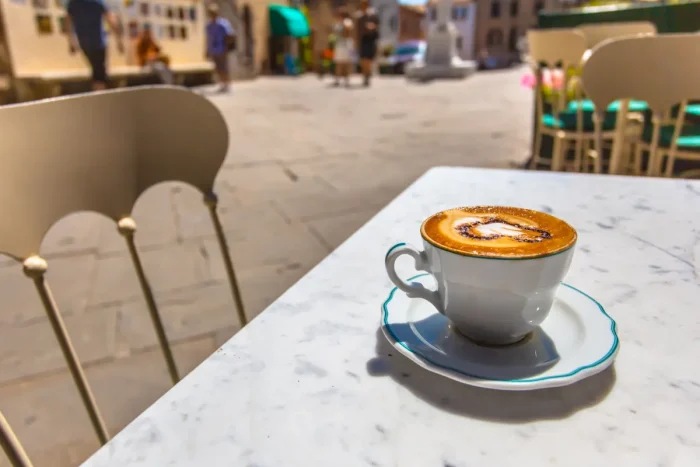
Some people might say that this is the real attraction of the Lower Town – and it’s not a building or a natural sight: it’s a habit I am sure you will love.
I am talking about the “Spica” – a habit for Saturday mornings. This is the phenomenon where everyone dresses up in their best clothes to drink coffee and be seen on the terraced cafes of Bogovićeva and Preradovićeva streets. It’s superb people-watching (and the coffee is great, too!)
Right nearby is Cvjetni Trg (Flower Square), which is always full of – you guessed it -flowers and even more coffee drinkers.
Connecting this square to Ilica Street is the Octogon Passage. It’s an architectural gem with a stunning stained-glass roof. Walking through it is free, and it gives you a quick, beautiful taste of late 19th-century elegance without needing a ticket
Zagreb Lower Town Parks

I already told you that parks and garden squares are the main attractions in the area. They are surely more impressive than you might imagine!
Lower Town’s parks offer a delightful escape from the city bustle, as I briefly mentioned before. And you’ll notice that there’s something unique about them, so read on!
Lenuci’s Green Horseshoe
This iconic park complex, shaped like a horseshoe, is the heart of Lower Town’s green scene.
This is basically a series of interconnected squares and parks, designed in a U-shape, and an area that you will end up visiting no matter what you’re doing in the area, as it surrounds the main attractions in the Lower Town.
It combines seven squares – Nikola Subic Zrinski (aka Park Zrinjevac), Josip Juraj Strossmayer, King Tomislav, Ante Starcevic, the Botanical Garden, Marulic, Mazuranić, and Marshal Tito.
I recommend starting in the upper right side of the “horseshoe” – the Park Zrinjevac area, then go South, head towards the Botanical garden and then back north all the way up to the square holding the Croatian National Theatre.
Visiting all these parks would require an entire day, although you can speed up through the areas if you don’t want to get too in-depth with them.
A Note on Seasonality: If you are reading this and planning a trip for December, this entire Horseshoe transforms into “Advent in Zagreb,” one of the best Christmas markets in Europe. The parks are filled with lights, food stalls, and music.
Best places to stay in the Zagreb Lower Town Area
Zagreb’s Lower Town whispers stories of a bygone era, where grand hotels catered to the 19th-century bourgeoisie and high society.
But now, you can book your stay here – and be sure that you get to spend some amazing time in some historic gems (usually in neoclassical or secessionist styles), offering a perfect blend of an authentic atmosphere and modern comfort
Here are my top choices when it comes to the best accommodation in the Lower Town area:
Esplanade Zagreb Hotel – 5 Stars

Originally built in 1925 to accommodate Orient Express passengers, it went under extensive renovations and now offers luxurious rooms and modern amenities, with top service.
Located on the main Mihanoviceva Street, this hotel is a stone’s throw from all the main attractions in the Lower Town area (and perfectly placed for you to visit Zagreb’s main attractions overall).
Click here to check prices for your dates
Hotel Dubrovnik – 4 Stars

Occupying a prime spot at Trg Bana Jelacica since 1929, Hotel Dubrovnik is an amazing place for your stay. Plus, you can always brag that you visited Dubrovnik… in Zagreb. Ha!
Jokes aside, this hotel places guests at the heart of Zagreb, surrounded by the city’s premier business, cultural, and entertainment destinations, as well as parks and vibrant cafes.
The hotel features a modern wing, while its façade on Ban Jelacic Square preserves its historical essence, but they’re both amazing in my opinion.
Click here to check prices for your dates
Beyond the Grand Dames:
- Boutique Charm: Seek out smaller, design-driven hotels like The Canopy by Hilton Zagreb City Centre for a contemporary twist on history.
- Local Favorites: Immerse yourself in local culture at family-run hotels like Hotel Academia for a personalized experience.
- Budget-Friendly Options: Discover guesthouses or hostels like Hostel Stay Swanky for a more affordable stay.
Final Words
This would be my travel guide to Zagreb’s Lower Town area, highlighting the main attractions and things to do, as well as the best hotels here.
If you have additional questions – or recommendations in terms of attractions, don’t hesitate to let us all know by commenting below!